
Tympanometry
226 Hz Screening Tympanometry
Standard 226 Hz probe tone screening, with an optional 1000 Hz tone available for testing younger infants.
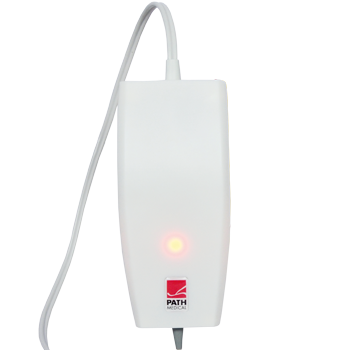
A screening tympanogram, without the extra hardware.
nanoTymp is a USB probe that turns any Windows, Mac or Android device into a screening tympanometer. There's no separate unit to charge or calibrate — plug it in, fit the probe, and a tympanogram appears on screen within seconds. It's built for hospitals, clinics, and hearing care practices that need a fast, dependable middle-ear check without the cost or complexity of a full diagnostic instrument.
nanoTymp does one job and does it without extra hardware to manage: a 226 Hz probe tone, IPSI reflex testing across 500 Hz, 1 kHz, 2 kHz and 4 kHz plus broadband noise, and a result on screen almost as soon as the probe seals.
Because the probe itself carries no display or processing hardware, all of the intelligence lives in software that runs on whatever computer or tablet is already in the room. That keeps the unit simple and low-cost, while still giving clinicians a live, real-time preview of both ears rather than a delayed printout.
Results move as easily as they are captured. Reports print in full colour in seconds, export straight to PDF for an electronic record, and the built-in NOAH module means a nanoTymp reading slots into the same patient file as every other test in the practice.
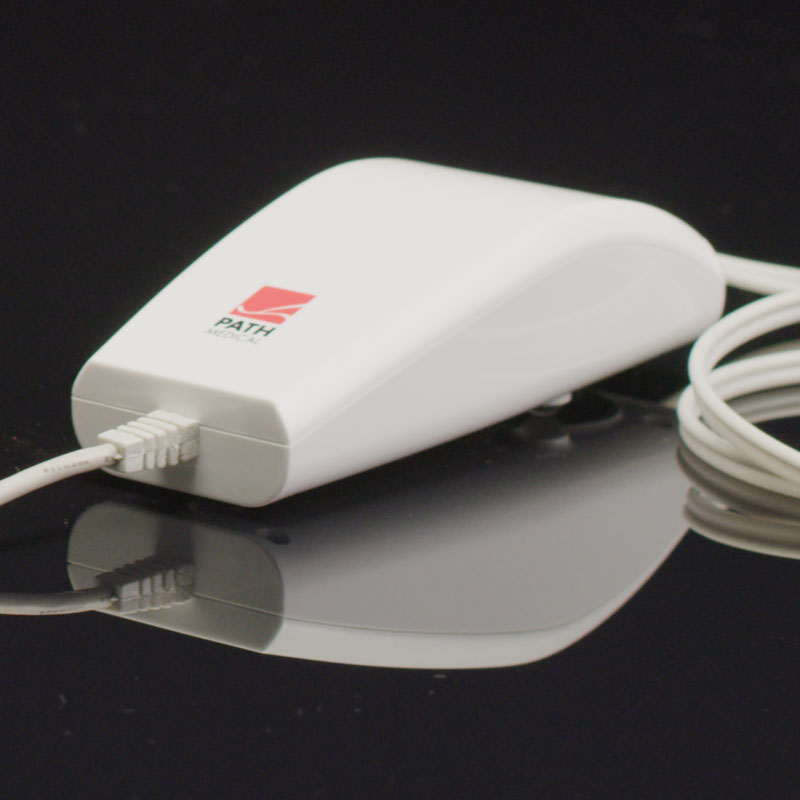
There’s no on-device screen to navigate and nothing to charge-nanoTymp draws its power straight from the USB port it’s plugged into. That keeps setup down to a single cable and a probe tip, so new staff can be testing confidently within minutes.
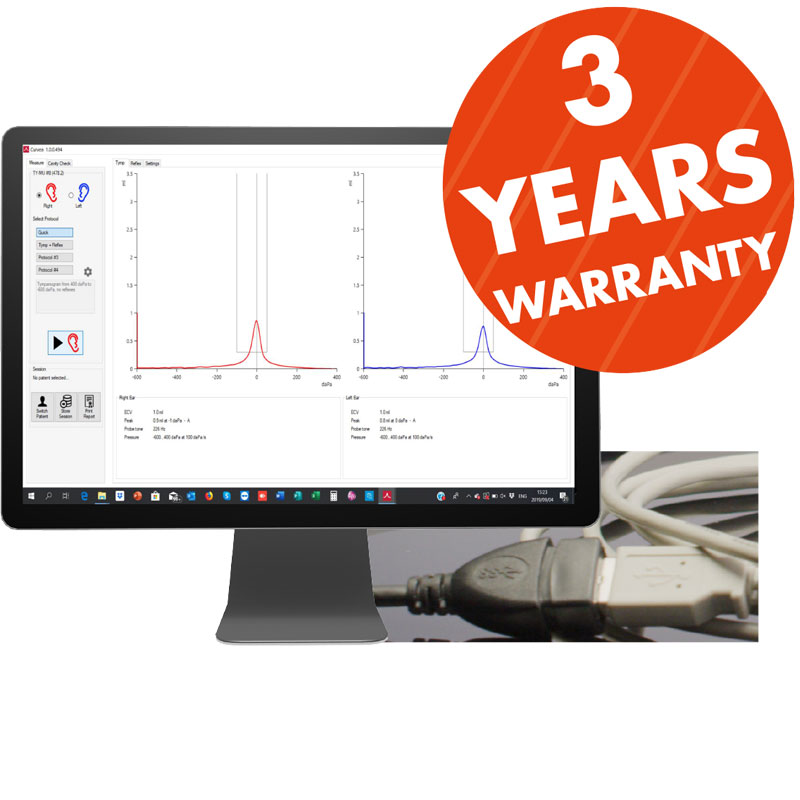
Most screening tympanometers make you wait for a finished trace before you know what you are looking at. nanoTymp’s software shows left and right ear results live as the probe seals, and once the test finishes, a full-colour report is ready to print or export as a PDF.
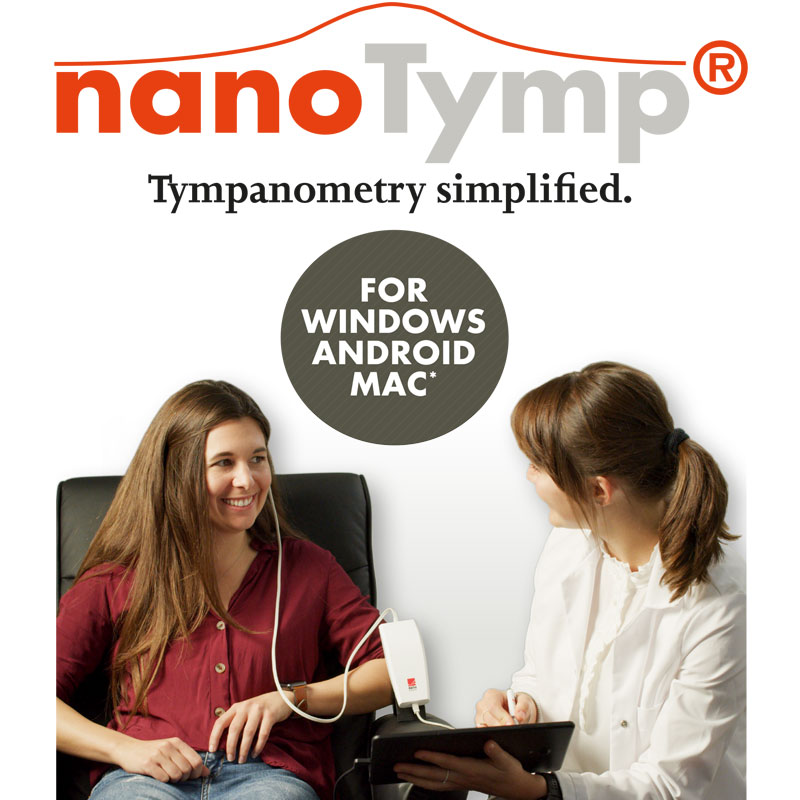
Standard 226 Hz probe tone screening, with an optional 1000 Hz tone available for testing younger infants.
Ipsilateral reflex testing at 500 Hz, 1 kHz, 2 kHz and 4 kHz, plus broadband noise, run as part of the same test.
Explore the latest documentation and training materials for nanoTymp.
Talk to a local specialist to discuss workflow design, implementation planning, onboarding support and other aspects of integrating nanoTymp into your clinic.
Contact and Distribution